Learn to Easily Tell Which Kinds Bite & Spread Diseases
We’ve all been outside and heard the telltale buzz of a mosquito near our ear. And we won’t even talk about the itchy welts that seemingly show up out of nowhere. But did you realize that not all types of mosquitoes are the same?
Some mosquito varieties are annoying vampires looking for their next meal, others carry serious diseases, but some are actually harmless. Keep reading to find out from the pest control experts at Fairway Lawns which kinds of mosquitoes are dangerous. Plus, how to tell one type from another.
How Many Kinds of Mosquitoes Are There? 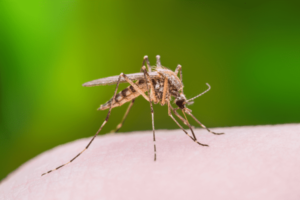
There are over 3,000 mosquito species around the globe, and about 200 of those call the United States home. Yikes! But before you start packing to move to Antarctica, there’s good news: Only a small subset of these mosquitoes poses serious health risks.
The four main categories of mosquitoes are Aedes, Culex, Anopheles, and Culiseta. Each has its own preferred biting times, favorite hosts, diseases it can transmit, favorite breeding spots, and geographic locations. And remember, not all mosquitoes bite humans. Some prefer birds, some go for other mammals, and several species don’t even bite.
1. Aedes Mosquitoes
These guys are highly adapted to human environments. And unlike many mosquito species, Aedes are active during the day. If you’re outside gardening or grilling, they can ruin your good time. Even worse? They prefer human blood over animal blood.
Yellow Fever Mosquito (Aedes aegypti)
- Known for transmitting Zika, Dengue, Chikungunya, and Yellow Fever
- Breeds in artificial containers and urban environments (tires, flower pots, buckets, birdbaths, etc.)
- Found mostly in the Southeast and Southwest U.S., along the Mid-Atlantic, and in parts of California
- Thrives during warm, humid months
Asian Tiger Mosquito (Aedes albopictus)
- Recognized by its striking black-and-white markings
- Persistent, aggressive biting behavior during the daytime
- Not native to the United States and can survive in cooler climates, which has allowed it to spread across the Southeast, Midwest, Northeast, and Pacific regions
- Breeds in tires, containers, and shaded areas
Eastern Saltmarsh Mosquito (Aedes sollicitans)
- Extremely aggressive biter during the day and at night
- Not typically a major disease spreader
- Breeds in salt marshes and coastal wetlands along the Atlantic Coast and Gulf Coast
- Can travel up to 40 miles from its breeding site
2. Culex Mosquitoes
This category of mosquitoes prefers feeding from dusk to dawn. They’re the ones we often associate with annoying us inside our homes and hanging around stagnant or polluted water (storm drains, sewers, neglected pools, etc.). Worst of all, Culex mosquitoes are the primary carriers of West Nile virus in the United States.
Southern House Mosquito (Culex quinquefasciatus)
- Found throughout the Southern U.S.
- Known for transmitting West Nile virus, St. Louis encephalitis, and canine heartworm.
- They like breeding in nutrient-rich standing water
Northern House Mosquito (Culex pipiens)
- Thrives in urban and suburban environments, particularly in warm and tropical climates
- Uses man-made structures, laying large numbers of eggs in sewers, retention ponds, storm-water catch basins, ground pools, and wastewater containers
- Hibernates during winter inside (basements, crawl spaces, and attics) and outside (animal burrows, tunnels, and logs)
Western Encephalitis Mosquito (Culex tarsalis)
- Found in the Midwest and Western states,
- Delivers a more painful bite than its relatives
- Can breed at elevations up to 10,000 feet, making it a concern even in mountainous regions
3. Anopheles Mosquitoes
With roughly 450 species worldwide, these nighttime biters are the only mosquitoes capable of transmitting human malaria.
Common Malaria Mosquito (Anopheles quadrimaculatus)
- Historically, this species was responsible for malaria transmission in the U.S.
- Breeds in freshwater bodies with vegetation (ponds, swamps, marshes, and slow-moving streams)
- Found mainly in the Eastern U.S., Midwestern, and Southeastern states
4. Culiseta Mosquitoes
This type of mosquito isn’t talked about as much because it’s found primarily in cooler regions. They’re also considered a lower risk to humans.
Common Characteristics of Culiseta Mosquitoes
- Prefer cooler temperatures and are often active in early spring or fall when other species are less prevalent
- Breed in snowmelt pools, woodland ponds, and cold, stagnant water
- Found mostly in the Northern U.S., higher elevations, and parts of Canada
How to Identify Different Mosquito Species
Mosquito misidentification is common, even in media reports and news stories. That “mosquito” you saw in a documentary might actually be a crane fly (which doesn’t bite at all). So how do professionals tell these tiny insects apart?
The “Three Ps” of Mosquito Identification
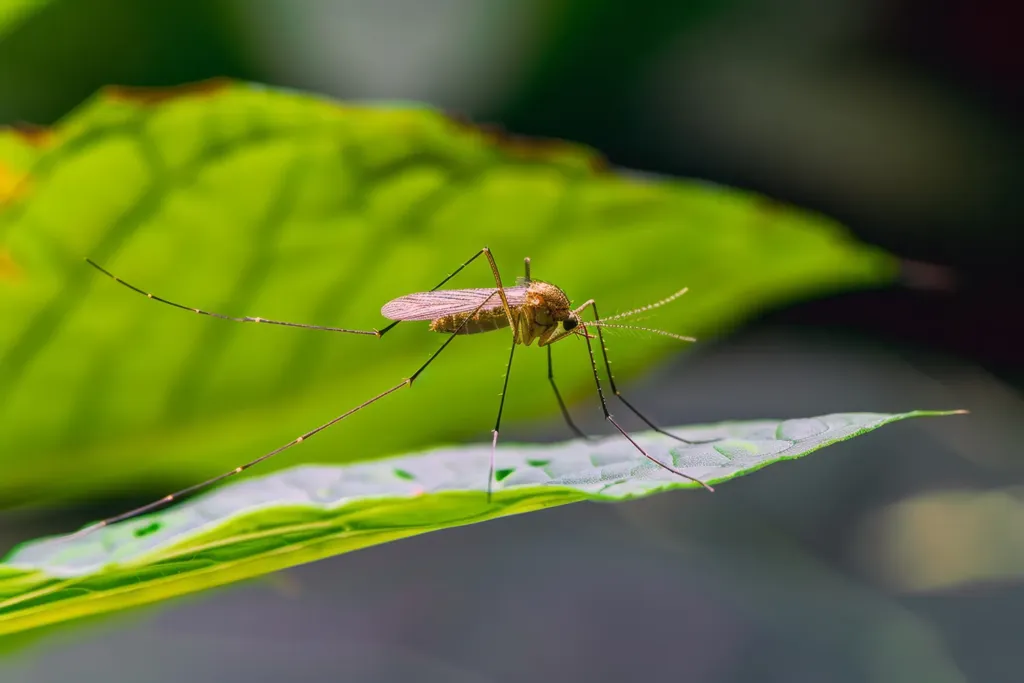
Palps. These are the sensory organs near the mosquito’s mouth. In Anopheles mosquitoes, the palps are long and prominent, roughly as long as the proboscis. In Aedes and Culex mosquitoes, the palps are much shorter.
Posture. This is actually one of the easiest ways to ID a mosquito. When an Anopheles mosquito lands and rests, it holds its body in a straight-line posture (abdomen angled upward). Aedes and Culex mosquitoes, on the other hand, form a hunched “V” shape when they rest.
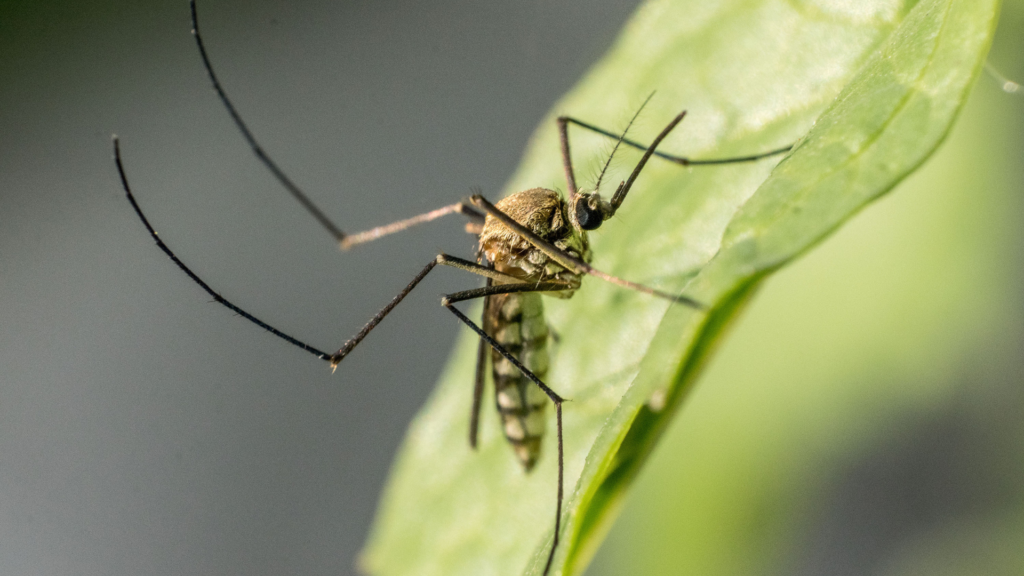
Pattern. Look at the mosquito’s coloring. Black-and-white striping, especially on the legs, is typically Aedes. More uniform coloring, like brown or gray, is probably a Culex or Anopheles mosquito.
Diseases Transmitted by Mosquitoes
- West Nile Virus: The most widespread mosquito-borne disease in the U.S., primarily transmitted by Culex mosquitoes
- Zika: Regional outbreaks, mainly transmitted by Aedes aegypti and Aedes albopictus
- Dengue: Another Aedes-transmitted disease, with occasional outbreaks in southern states
- Chikungunya: Less common but still a concern, also spread by Aedes mosquitoes
- Malaria: Rare in the U.S. but still possible through local transmission by Anopheles mosquitoes
- Yellow Fever: Mainly a travel-related risk, though Aedes aegypti populations exist in the U.S.
Why Do Some Mosquitoes Bite Humans & Others Don’t?
Did you know that only female mosquitoes bite? Males are perfectly content sipping nectar, plant sap, and honeydew. However, females need blood for egg development.
Females of most mosquito types are attracted to warm-blooded animals. The most common hosts include birds and mammals, though females of several species take blood from reptiles and frogs.
Female mosquitoes can detect carbon dioxide emitted from warm-blooded animals over long distances. As they fly upwind toward a host, other cues play a part in their targeting. That includes their vision, moist air currents rising from the host, and specific odors emitted by people.
Females of most species tend to restrict feeding to particular periods of the daily cycle. Blood feeding is most common at twilight into early evening, but can also occur during warm mornings and on cloudy days.
When to Worry About Mosquitoes
Seeing mosquitoes? Getting bit? Those are obvious reasons to contact your local team of pest control specialists. You don’t want swarms ruining your outdoor time. Other risk factors to consider?
- Standing water. More breeding sites mean more mosquitoes.
- Weather. Warm, humid conditions extend mosquito season and increase populations.
- Travel exposure. If you or family members have recently traveled to areas with mosquito-borne diseases, be more vigilant about symptoms after bites.
- Local outbreaks. Pay attention to public health announcements about West Nile virus or other mosquito-borne illnesses in your area.
Mosquito Prevention & Control Tips
Effective mosquito control requires several complementary techniques.
Habitat disruption is your first line of defense. Eliminate standing water wherever possible. This prevents larvae from developing. Try your best to empty birdbaths weekly, clean gutters, dispose of any old items sitting in your yard, and make sure outdoor furniture easily drains.
Remember, mosquitoes can breed in surprisingly small amounts of water. Even a bottle cap left outside can start a new generation of these winged pests.
Identifying breeding sources is crucial because different species breed in different habitats. Culex mosquitoes love dirty water in storm drains. Aedes mosquitoes prefer clean water in containers. Anopheles mosquitoes need freshwater with vegetation. Knowing which species you’re dealing with helps you target the right breeding sites.
Seasonal awareness helps you time your efforts. In most of the U.S., mosquito season runs from spring through fall, with peak activity in summer. But in warmer southern states, mosquitoes can be a year-round concern.
Personal protection is key as well. For instance, you should wear protective, light-colored, loose-fitting clothing and use EPA-registered repellents. If possible, avoid outdoor activities in areas and times when mosquitoes are most active.
Chemical suppression is necessary when preventative or DIY efforts don’t work. Use insecticides against adults and/or larvae when appropriate, following all label instructions. Trusting professional pest control experts ensures that the insecticides are applied as effectively as possible.
Time to Go, Mosquitoes!
The most effective mosquito programs use species-based treatment strategies. They also combine larvicide treatments with adult mosquito reduction and habitat modification. New, cutting-edge systems can interrupt the lifecycle, stopping the next generation of mosquitoes and reducing future populations in your area.
Ready to protect your home, lawn, or business? Fairway Lawns provides identification and elimination of mosquito breeding sites as well as ongoing monitoring. We proudly serve seven states and dozens of communities, ensuring high-quality lawn care and pest control services across the South:
Huntsville AL
Birmingham AL
Jacksonville FL
Conway AR
Springdale AR
Ft Smith AR
Little Rock AR
Jacksonville FL
Augusta GA
Tulsa OK
Columbia SC
Greenville SC
Charleston SC
Knoxville TN
Nashville TN
Memphis TN
Blog Contributor: Greg Davis
Greg Davis serves as the Birmingham Branch Manager for Fairway Lawns and brings 38 years of lawn care experience. His perspective is built on decades of helping customers improve struggling lawns, training service teams, and focusing on consistent field improvement. His experience makes him a valuable contributor on lawn health, weed control, team development, and customer service best practices.