Cotton country and shaded old streets both keep ticks close at hand
Athens anchors Limestone County with a courthouse square, a historic college, and a landscape that still runs to cotton, hay, and open farmland in every direction. That mix of shaded old neighborhoods near downtown and wide row-crop country at the edges is part of the town’s appeal, and it also gives ticks two different ways into a yard, whether off a mature tree canopy in the historic district or a brushy field line out on a section road. A well-kept place can still pick up ticks from the pasture next door or the fencerow along the property.
Fairway Lawns provides professional tick control in Athens, AL for homeowners who would rather break the cycle than fight it year after year. We work the rough, shaded, overgrown ground where ticks build before they reach the house, whether that is a leafy backyard in town or a field edge on an acreage. Choose a single visit or recurring coverage through the warm season, expect a free quote before we begin, and on recurring plans we will come back if ticks return between stops.
A downtown lot and a field-edge lot fight very different battles
An in-town Athens lot and a place out among the fields rarely share the same weak point. A historic-district yard under big shade trees may carry its worst pressure in the leaf-littered back corner, while a home on a section road collects ticks where the hay field leans over the fence. An acreage ringed by woods can hold a thick understory that feeds ticks all summer. Working out which of those is doing the damage is why we inspect before we treat.
We open every visit by walking the property, noting where the shade falls, where rain stands, how the beds and fencerows are arranged, and which patches of ground the household actually uses. The treatment then targets those staging areas along with the spots people and pets gather: the yard, patio, pet runs, play sets, pool decks, seating areas, edge grass, flower beds, and the brushy margin that wraps the lot. Cutting off what ticks need outlasts any effort spent on the few you happen to see.
Each step is timed to set up the one that follows
Because no two Athens properties behave alike, the plan grows out of what the walk-through turns up rather than a fixed list. A normal visit runs through four stages.
We start on foot, taking the measure of the shade, the drainage, the height of the grass, the thickness of the brush, the trails the animals beat, and the line where mowed yard surrenders to field or woodlot. That read shows us where the ticks have bunched and where the treatment will count.
With the strongholds marked, the product goes where ticks actually wait out the heat: the edge grass, the bed lines, the fencerows, the damp bottoms, the shaded sides of buildings, and the rest of the cover they hole up in. Going straight for that ground beats spraying the open yard the ticks never touch.
After that we set a treated buffer around the spaces you use most. It can follow the yard's edge, the foundation, the fences, the shrubs and beds, the tall grass, and the woodlot line, then carry on under decks and porches, around the barn or shed, through pet runs and play areas, across the patio, and into any deep shade or wet bottom where ticks try to slip back.
Since the fields and woodlots keep feeding ticks back toward the house, one treatment only opens the account. Visits repeated through the active months catch the newcomers before they settle and hold the protection steady as the place grows up through the summer.
Out here a tick can settle in for weeks before anyone notices
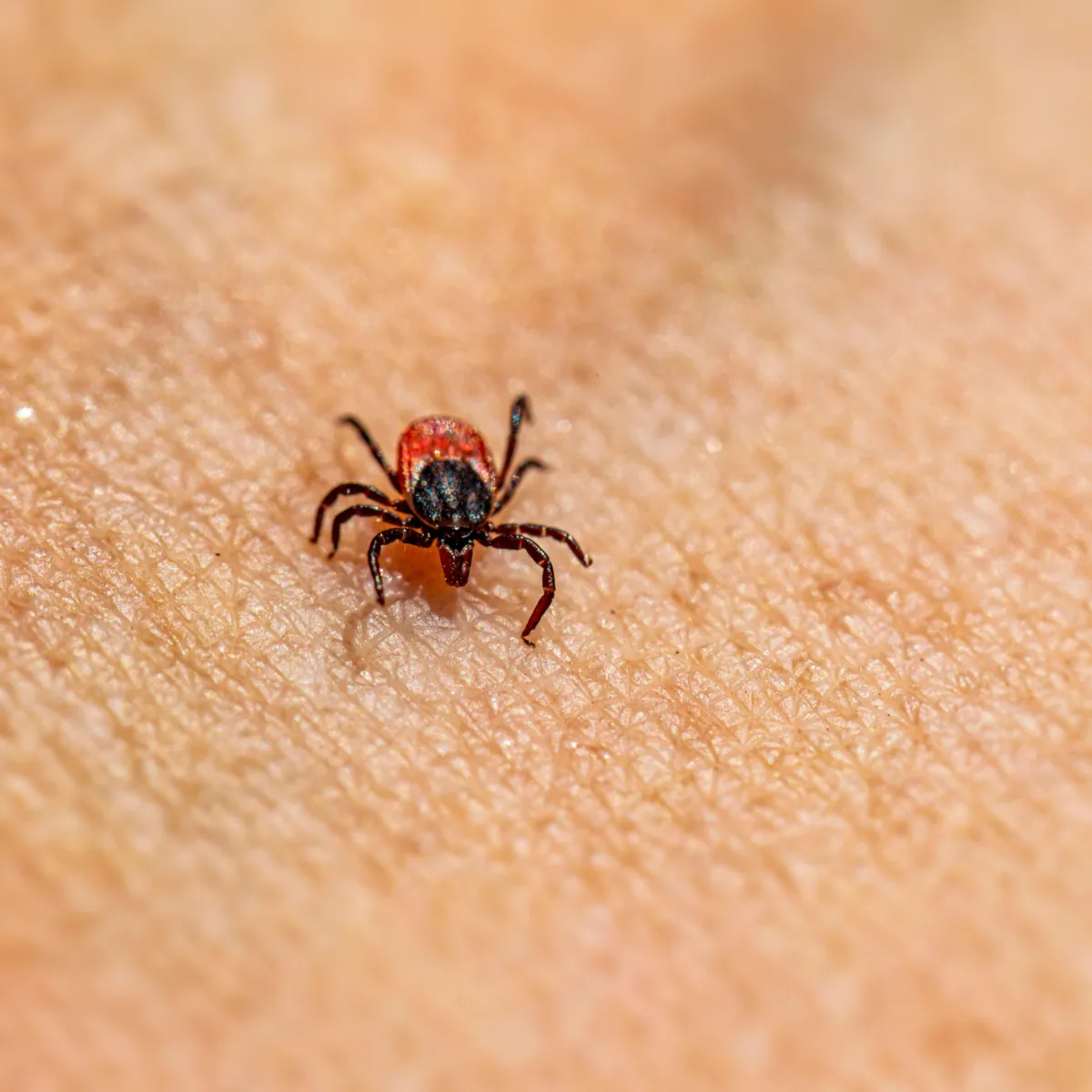
A tick is never just a nuisance in farm country, because it can carry disease into your family and your animals while keeping almost out of sight. Plenty of Limestone County households never catch on until one turns up burrowed in the dog after a run along the fencerow, or fixed to an arm after an afternoon in the garden. A bite that leaves no sting is precisely how a tick problem gains a long head start.
The Tennessee Valley around Athens suits ticks as well as anywhere. Warm, drawn-out summers, steady rain, and the hay fields, fencerows, and woodlots scattered through the county hand ticks shade, cover, and a constant run of deer, rabbits, and rodents to ride. A neatly mowed yard counts for little by itself, since a few rank, shaded corners along the perimeter can keep the whole population going. Scheduled treatment knocks those numbers down at the source instead of leaving you to deal with the overflow at the door.
Ticks hold to the field edge and the leaf litter, never the open row
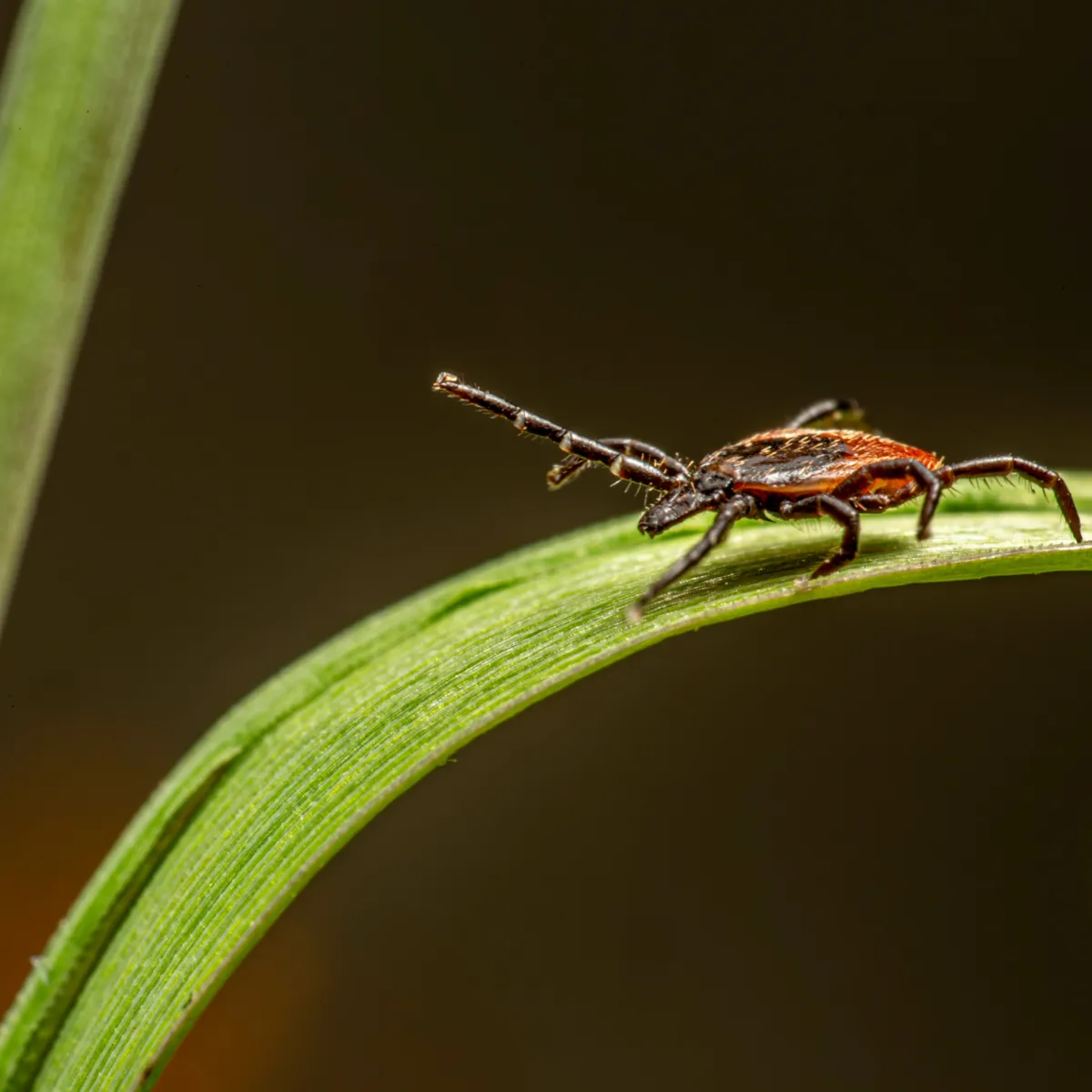
Ticks avoid open sun and bare ground, so they collect in the parts of a property a quick look passes over. Tall grass and brush give them a launch point; leaf litter, brush piles, and the shade under a porch or deck hold the moisture they cannot do without. A mulched bed along the house or a fencerow down the line simply gives them a road.
Out where the yard meets a field or a woodlot, anything in the gap, a barn, a gate, a hay ring, the kids’ swing set, sits on the route ticks ride in on deer and rodents. Pet areas catch the worst of it, since dogs beat the same trails into the brush day after day. The shaded, slow-drying edges of a country lot reward the hardest look, because they stay damp and hospitable long after the open field has cured in the sun.

The yard turns risky right where the family gathers most
On an Athens property, the tick problem usually comes into focus once you notice how the family moves across the very ground ticks favor. The dog works the fencerow on instinct, and the kids range to the back of the lot, cutting through tall grass toward the tree line or the edge of a field. Because the bite never stings, a tick can ride indoors on a child or a dog and go unnoticed long after everyone has come in for supper.
Bring that activity down along the routes everyone uses and the whole place opens back up. The kids can roam the back of the yard again, the dog can patrol the fencerow without dragging hitchhikers home, and an evening on the porch stops ending with a tick check at the door. Pointing the treatment at where the family actually goes is what restores that comfort.
A long valley growing season keeps ticks active for months
Spring gets things moving. As the fields green and the valley soil warms, ticks shake off the winter and spread out hunting a host, so an early treatment heads off that first push before it settles into the shaded fencerows and field edges. Summer keeps the air thick and the watered, shaded parts of a yard comfortable even as the open crop ground dries, and that is exactly when treated borders and pet runs prove their worth through all the time spent outdoors.
Fall convinces a lot of country folks to ease up too soon, yet activity can stretch deep into the cooler weeks as fallen leaves pile up new shelter and some ticks keep questing past the first hard morning. Rain ties it together, since every soaker refills the moisture ticks count on, and while the open field sheds water fast, the ditch lines, low corners, and shaded fencerows stay damp and welcoming well after.
The corner behind the problem is hardly ever the obvious one
Solid tick control depends on finding where the pressure really starts, and around Athens that is seldom the spot you would guess. It might be a rank corner you rarely mow, a shaded stretch behind the barn, or a fencerow choked with brush. Fairway Lawns reads each property on its own terms rather than running one stock routine across every yard in the county.
Homeowners stick with us for technicians who understand valley farmland, licensed and insured service, plain pricing, and a free quote from a crew that knows how fields and weather drive tick numbers. Recurring coverage is there for anyone who wants the relief to stick, treatments are planned with kids and animals in mind, and a rebound between visits brings us back to re-treat. Since we handle far more than ticks, the same crew can take on other outdoor pests when they turn up.
A little upkeep between visits keeps the calm in place
You can stretch a treatment by making the place less of an open door. Keeping the grass cut and the brush knocked back lets sun and air dry the ground, thinning the cover ticks hide in. Hauling off leaf piles, brush, and scattered junk takes away the cool, sheltered spots where they sit and wait.
It also helps to keep pet areas tidy, look over the dog after every outing, and lay off the habits that pull in deer and rodents, with moving a feeder back from the yard an easy start. A strip of gravel, rock, or mulch between the mowed yard and a field or woodlot edge gives ticks a dry line they would rather not cross, and setting the swing set away from the brush keeps the kids out of the worst of it. When one corner keeps acting up no matter what, recurring service is the surest way to settle it.
Sometimes one hot corner just needs a single focused visit
A one-time treatment fits when a single part of an Athens property suddenly gets bad. Folks usually call after spotting ticks near the patio, along a worn pet trail, in a thick planting, or in a spot they are about to open up for a cookout or a family reunion. It knocks the local activity down quickly and works as a trial run before anyone settles on a recurring schedule.
Real relief comes from never letting the population rebuild
When the aim is lasting relief instead of a short break, recurring tick control is the stronger choice. The population climbs back as rain, heat, and fresh growth move through the season, so scheduled returns meet each wave before it can dig in. That steady rhythm also cuts the odds that the same brushy corners keep stirring up the same trouble.
Farms and homes along the same fields meet the same pests
Fairway Lawns serves Athens households that want their yards, patios, pet areas, and the rest of their outdoor ground kept clear of returning ticks. Other Limestone County properties with the same makeup, field and fencerow borders, woodlot cover, trapped moisture, and steady outdoor traffic, tend to do well with the same plan. If your place sits out on a section road and you are not sure it falls in our range, just ask, because we cover plenty of ground past the city limits.
The same questions come up across Limestone County yards
When ticks are cutting into how much of your own place you can enjoy, Fairway Lawns can step in with treatment aimed right at where they breed. Whether they ride in off a hay field, a brushy fencerow, a worn pet trail, or the thick bed by the patio, our crew will walk the property, treat the ground that counts, and lay out a plan that fits how your household lives outdoors. Book your visit today, or reach out to schedule service and claim your free quote.