
Dollar Spot Fungus Treatment Identify Prevention
Posted on February 18, 2026
What to Do If Dollar Spot Fungus Is Ruining Your Lawn?
Learn How to Stop This Annoying Grass Disease
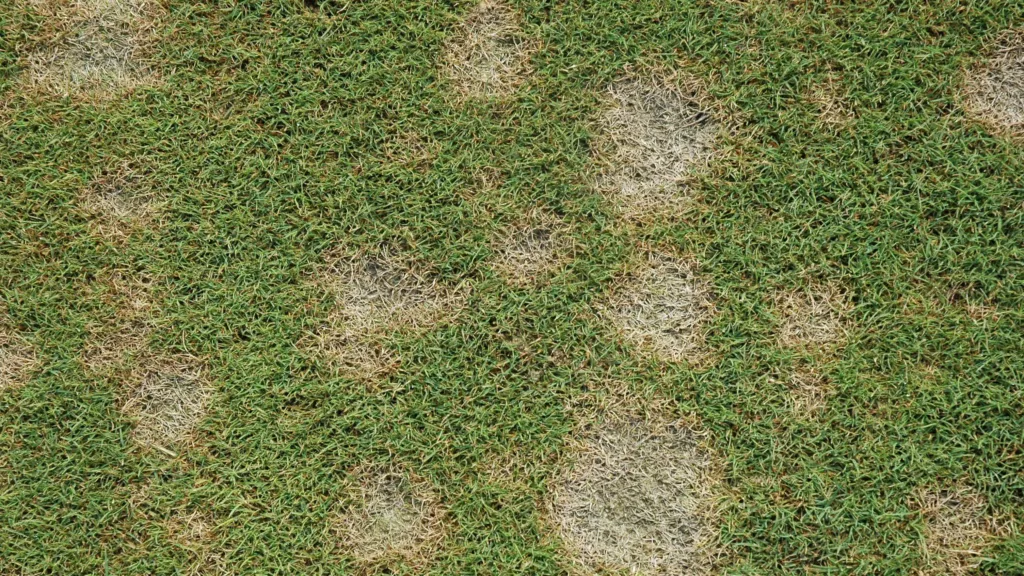
Bleached, straw-colored patches suddenly dotting your yard? There’s one main culprit: dollar spot fungus. It’s a common lawn disease that wrecks the aesthetic of your grass.
In fact, more money is spent treating this single turfgrass problem than any other. It’s incredibly widespread and frustrating to deal with. But before you panic, let the experts at Fairway Lawns walk you through what’s actually happening to your grass and what you can realistically do about it.
What Is Dollar Spot Fungus?
Dollar spot is caused by a fungal pathogen known as Clarireedia jacksonii.The specific disease attacks your grass’s leaf blades and not the roots or crowns, which is actually good news. It means your lawn can bounce back with the right care.
The name “dollar spot” comes from the appearance of the damage on mowed turf. You’ll see circular, silver dollar-sized spots(1 to 2 inches across) that turn a bleached tan color. These spots can merge together into larger, straw-colored patches that really thin out your grass and invite weeds in.
Dollar spot will attack cool-season grasses like Kentucky bluegrass, fescues, and perennial ryegrass. But it’s also happy to mess with warm-season grasses like Bermuda and zoysia as well. Basically, if you’ve got a lawn, you’re potentially vulnerable.
When & Where It Shows Up
Dollar Spot really likes its particular window of weather, especially temperatures between 60°F and 90°F, combined with humid days and cool nights with dew. So you usually see it from late spring to early fall, with outbreaks commonly peaking in late summer when all those conditions are just right.
This lawn fungus loves prolonged moisture on grass blades and low nitrogen levels in the soil. If you’re watering your lawn and that water’s only wetting the leaf blades (not soaking deep into the root zone), you’re creating exactly the conditions this fungus craves.
Dollar spot spreads most through mycelium, or fungal threads, on previously infected plants. The most potent carriers? Grass clippings. Even walking around after mowing can spread it. Annoying, right?
It overwinters as structures called pseudosclerotia, buried in dead plant debris. When things start to warm up in the spring, those structures wake up and start all over again. In most regions, the cycle runs from early May through the end of October.
How to Identify Dollar Spot
The most obvious indication is those characteristic patches: small, straw-colored, or bleached spots roughly the size of a silver dollar. On closer inspection, you’ll see tan lesions running across the blade in an hourglass shape. They’re outlined with a reddish-brown border.
Another sign you’re dealing with dollar spot fungus? White, cobweb-like growth on dewy morning grass. That’s the mycelium becoming visible when the grass is wet. As the sun comes out and the blades dry, it disappears, so you might miss it.
What Causes a Dollar Spot Outbreak?
- Irrigation in the afternoon or evening. Watering at that time of day makes grass blades stay wet for extended periods.
- Low nitrogen levels. Lawns that are under-fertilized are most susceptible because the grass is not growing well enough to outgrow the infection.
- Mowing stress. Cutting your grass too short, with dull blades, or scalping the lawn weakens grass and makes it easier for this fungus to invade.
- Thatch buildup and soil compaction. Less air and water penetration creates that dry-soil-but-moist-canopy situation.
- Poor air circulation. Dense shrubs, low tree branches, and shade can trap moisture, encouraging lawn diseases.
10 Steps That Help Treat This Lawn Fungus
- Change your watering schedule
This may not seem like a big deal, but it really is. Water deeply but infrequently, aiming for about 1 inch per week, in the early morning hours (between 5 and 10 a.m.).
Watering at this time gives the soil time to soak up moisture, allowing the grass blades to dry quickly as the sun comes up. Remember, you want moisture in the root zone, not sitting on leaves.
And be sure to stop those shallow sprinklings in the evening. Sure, sometimes that’s the only time you’re home to turn on the sprinkler. But you’re basically welcoming dollar spot into your yard.
- Adjust your mowing height
Taller grass blades shade the soil, retain better moisture in the root zone, and create an environment less favorable for the fungus. Plus, taller grass is just healthier and more resilient overall.
Important: Never remove more than one-third of the grass blade height in a single mowing. And be sure to keep your mower blades sharp. Dull blades tear grass instead of cutting cleanly, and those ragged edges are more susceptible to infection.
- Feed your lawn nitrogen
Give your grass a boost of slow-release nitrogen fertilizer in late spring to help it grow through early summer, when outbreaks of dollar spot often begin. Continue with light, regular nitrogen applications through the growing season at a rate recommended for your grass type.
Healthy, well-fed grass can actually outgrow the disease. Undernourished lawns? They struggle to recover and just keep getting worse and worse.
- Do remove the dew
If you’re really serious about prevention, mow early in the morning to remove dew-covered grass tips. On larger properties, some people even drag a hose or rope across the lawn to knock dew off the blades or roll something lightweight across the yard to soak up the dew. These techniques may sound simple, but they work.
- Let your soil breathe
Lawn aeration once a year reduces compaction and improves water and nutrient penetration. Otherwise, the elements your grass needs to thrive can’t get down to where your grass can use them.
Also, if your thatch layer exceeds half an inch, dethatch to improve airflow and drainage. Again, you don’t want anything blocking water and nutrients from getting to the roots.
- Improve access to air and sunlight
Prune low tree branches and thick shrubs that shade your lawn and can foster a moist atmosphere over the grass. Improved air circulation prompts dew and irrigation to dry more quickly, breaking the ideal conditions of the fungus.
- Get the right grass
When it’s time for overseeding or a lawn renovation, pick a variety of grass that has more resistance to dollar spot disease. Grass isn’t all the same. Some have been bred to resist common lawn diseases like this.
You should also figure out the proper type of grass for your region. If you’re battling your climate, trying to grow cool-season grass in a warm region or vice versa, then you’re just making everything more difficult than it should be. Match your turfgrass choice to your geographic location, your soil, landscape, and how you actually use your lawn.
- Stop the spread
When you have active dollar spot, you don’t want to help it spread. Instead of mulching the grass clippings back into the lawn, bag or collect those from infected areas. Clean your mower deck and tools after use, especially if you’re moving from an infected area to a healthy one.
- Opt for a fungicide treatment
By far, the two best fungicides for dollar spot fungus are chlorothalonil and propiconazole. Here’s what lawn care professionals know but most homeowners don’t: You can’t just spray the same fungicide over and over. The fungus adapts to it. So if you want control in the long run, rotation is key! Usually, you’ll reapply every 14 to 28 days during high-risk times of the year.
- Reach out to Fairway Lawns
When you have a lawn fungus overtaking your yard, hiring a professional lawn care company will definitely pay off over the course of time. It will save you time, money, and headaches, since we know exactly what products to use, when to apply them, and how often to rotate them.
Dollar Spot Disease FAQs
What is the best fungicide for dollar spot?
Chlorothalonil and propiconazole are two of the best options. Just be sure to rotate them to help avoid resistance.
Will my lawn actually recover from this lawn fungus?
Yes! Since dollar spot attacks the leaf blades and not the roots or crowns, your lawn can absolutely bounce back. Most lawns will be showing visible improvement within 2 to 4 weeks after you implement control measures, add proper nitrogen, and maintain the appropriate mowing height.
Is fungicide always necessary?
If you catch dollar spot fungus early and adjust your maintenance practices accordingly, you can often suppress the disease without reaching for chemicals. However, if it sticks around, a fungicide application may be required.
Will dollar spot go away on its own?
Not usually. Active treatment will help limit the spread. To prevent it from coming back, try to maintain nitrogen levels, water early in the morning, mow high, and reduce thatch buildup.
Get In Touch With the Lawn Care Professionals!
DIY efforts can only take you so far. When you want to eradicate dollar spot (and other lawn care diseases), contact the experts at Fairway Lawns. With skilled technicians and the highest quality materials, we’ll get your lawn looking its best.
We proudly serve seven states and dozens of communities, ensuring high-quality lawn care and pest control services across the South:
- Huntsville, AL
- Birmingham, AL
- Bentonville, AR
- Bella Vista, AR
- Searcy, AR
- Jacksonville, AR
- Greenbriar, AR
- Beebe, AR
- Cabot, AR
- Rogers, AR
- Fayetteville, AR
- Conway, AR
- Springdale, AR
- Fort Smith, AR
- Little Rock, AR
- Jacksonville, FL
- Augusta, GA
- Tulsa, OK
- Columbia, SC
- Greenville, SC
- Charleston, SC
- Knoxville, TN
- Nashville, TN
- Memphis, TN