The Homeowner’s Complete Guide to Lawn Aeration
Meta Description: Learn everything about lawn aeration, from why it’s essential to how and when to do it. Discover the best methods, tools, timing, and post-care to get thicker, healthier grass.
Your grass may get trampled underfoot by kids or pushed down by lawnmowers and other heavy equipment. Pretty soon, the soil is compacted, making it hard for water and nutrients to soak in or grass roots to thrive. That’s where lawn aeration from Fairway Lawns comes in!
Our liquid aeration services help you keep a vibrant, healthy lawn. It’s a foundational lawn care service that your grass needs! Keep reading to find out how to aerate your lawn, how often to aerate it, and so much more.
What Is Lawn Aeration?
Aerating your yard allows air, water, and nutrients to get to the roots, where they’re most needed. That’s what we call “aeration.” Your grass can’t “drink” properly when the soil is packed down. So you can think of aeration as unclogging a straw.
Aeration reduces compaction of the soil, which can be brought on by foot traffic, large machinery, or soil that contains a lot of clay. It also deals with thatch buildup, AKA the spongy layer of dead grass and roots that obstructs fertilizer and water like a thatched roof.
Newly built properties often deal with compacted subsoil due to heavy construction equipment and new sod, which can add its own soil layers that interfere with drainage and root development.
In new subdivisions, where you might expect grass to be flawless from the start, aeration often helps open pathways through that compacted or layered soil. This also gives roots more room to grow.
Some other, more detailed reasons why lawns need aeration?
- Stronger roots. More oxygen = deeper roots that can survive summer droughts.
- Better nutrient uptake. Fertilizer won’t just sit on top or wash into the street.
- Less runoff. Water actually soaks in instead of creating mini-lakes on your lawn.
- Fewer bald spots. Compacted soil kills grass faster than your dog’s favorite pee spot.
- Healthier soil. Encourages earthworms and microbes that keep your lawn thriving and can lead to greener grass.
- Deal with thatch. Thatch is that layer of material sitting between the grass and soil surface. A little bit of thatch, but once the thatch layer builds up past about ½ inch, it starts blocking air, water, and nutrients from reaching the roots. Aeration keeps thatch in check, but if your thatch layer is thicker than that ½-inch mark, you may need to dethatch to get things back under control. Learn more about dethatching your lawn.
What Are the Different Types of Lawn Aeration?
Core aeration:
- Also called plug aeration, this method uses a core aerator with hollow tines that physically pull 3-4 inch plugs of soil out of the ground.
- Because the soil is actually removed rather than just displaced, it creates real, lasting space for air, water, and roots to move through.
- Core aeration has a “messier” look, since those plugs sit on your lawn until they break down, returning nutrients back to your lawn.
- It’s generally the best choice for heavily compacted yards, clay-heavy soil, or lawns that haven’t been aerated in several years.
Spike aeration:
- This method uses solid tines to stab holes into the ground without removing any soil.
- The problem is that solid tines just push soil aside as they go in, which can actually compress and compact the soil laterally around each hole, working against the goal of aeration.
- Spike aeration is the least effective method for aeration. It can work fine for lightly compacted, sandy, or already healthy soil, but it’s not the go-to for yards with real compaction issues.
Liquid aeration:
- This kind of aeration involves spraying a product designed to loosen compacted soil over time, without leaving plugs behind.
- Opinions are mixed on liquid aeration. Some lawn care pros and homeowners like it for its convenience and lack of mess, while others question how well it performs compared to physically removing soil, especially on more compacted or clay-heavy lawns.
- This cutting-edge form of aeration may be worth considering for mild maintenance between core aerations, but the results are less proven than core aeration’s.
Signs Your Lawn Needs Aeration
Not sure if your lawn needs to be aerated or not? Your grass usually gives you some pretty clear signs.
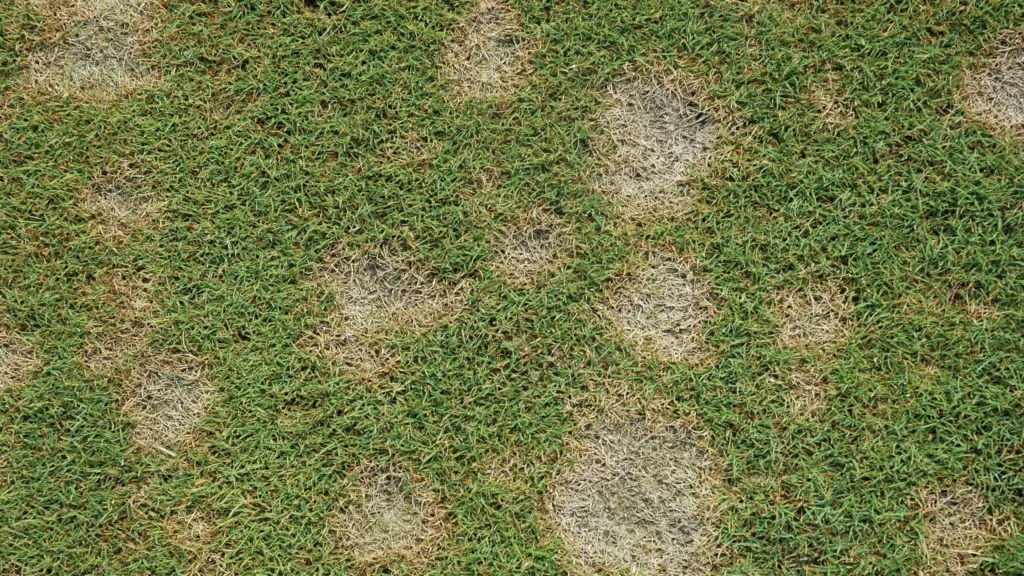
The Look: Keep an eye out for water pooling on the surface or running off instead of soaking in, or grass that looks thin, weak, patchy, yellow, or brown even though you’re keeping up with normal care. If your lawn seems to dry out really fast after you water it, that’s often compacted soil letting water run off rather than soak in.
The Feel: Hard soil (especially in high-traffic areas) is another telltale sign that your yard is compacted. There may also be a spongy feeling underfoot or noticeable thatch buildup.
The easiest way to check if your lawn needs aeration? Try the screwdriver test: If you’re struggling to push a screwdriver into the soil, that’s a good sign your lawn is compacted.
Wondering how your soil became compacted? You may not realize it, but your lawn deals with a lot day in and day out.
There’s heavy foot traffic, kids and pets running around, and repeated passes with mowing equipment. All of that adds up over time. It’s constantly packing the soil down more than you’d think.
Not that compacted soil is a reason for your kids to stop playing in the yard or for you to never mow again. It just makes annual aeration even more essential for your yard!
When to Aerate Your Lawn
Aeration puts a bit of temporary stress on your turf, so timing it right makes all the difference for the best recovery possible. In general, the optimal window is your lawn’s active growing season, when grass is putting out new growth and can bounce back quickly, filling in those openings rather than sitting there stressed and exposed.
You should also steer clear of aerating when the lawn is heat stressed, dormant, frozen, overly dry, or waterlogged. With all of that being said, the goal is to aim for soil that’s lightly moist. That’s when the tines can penetrate cleanly and pull real cores instead of just crumbling the ground.
- Core aeration is generally preferred for cool-season grasses (Kentucky bluegrass, fescue, ryegrass) or lawns with severe compaction issues.
- Early spring (March–April). If possible, try to avoid aerating during weed-sprouting season.
- Early fall (September–November). This gives roots time to recover before winter.
- Liquid aeration is usually recommended for warm-season grasses (Bermuda, Zoysia, St. Augustine) or lawns with mild to moderate compaction issues.
- Late spring to early summer (April–June). The best time is right when these grasses are waking up.
- Early fall (September–October) as grass is putting down roots in slightly cooler soil.
As for how often to aerate your lawn…if your lawn gets heavy use (kids, pets, weekly barbecues) or you’ve got clay soil, aerate every year. Sandy soil or low-traffic yards? Once a year or even every two years is best.
Other tips for aeration timing?
Frequency isn’t one-size-fits-all for every yard in the South. Heavy clay soil or lawns with high traffic may need aerating more than once a year, while moderate residential use typically lands around an annual aeration. On the flip side, loose or sandy soil often needs it less often.
It’s best not to stick to a fixed schedule and never budge off of it. You should let your lawn’s actual compaction and condition guide your decision. For instance, healthy, well-draining soil doesn’t need to be aerated just because a year has passed.
In short, really check in on how your lawn is doing before you plan the next round.
Why Pair Core Aeration and Overseeding?
These two lawn care services work even better together. Here are three reasons why.
- The seedbed effect. Those open soil channels become protected incubators for new grass seed. Better still, it’s safer from birds and the elements.
- The deep root advantage. With compacted soil out of the way, young grass roots can stretch deep into the earth, creating a stronger superlawn.
- The instant gratification factor. Aeration alone can take weeks to show results. But overseeding a lawn delivers visible improvements in as little as 10 days. Together, you can witness an entire change take place in about six weeks.
A note on timing with weed prevention. If you use a pre-emergent for weed prevention, such as one targeting crabgrass, you’ll need to time everything correctly.
Pre-emergents work by creating a chemical barrier that stops weed seeds from germinating. That same barrier can prevent your new grass seed from germinating too.
Aeration itself doesn’t destroy an existing pre-emergent barrier. If you’re planning to overseed, you’ll generally need to hold off on pre-emergent application for a period beforehand (or choose a product labeled safe for overseeding) so your new seed has a real chance to take root. Otherwise, your weed prevention efforts are stifling your overseeding efforts.
This is one reason fall is often favored for aeration and overseeding. Spring overseeding tends to mean going without pre-emergent protection during peak crabgrass season. So weeds and your new grass will be battling it out. Not ideal for getting your lawn to outcompete any plant invaders.
How to Aerate Your Lawn
The main steps in the ideal aeration process include aerating, overseeding, fertilizing or top-dressing when possible, and watering. That’s the short version, but here are some more details.
About 24 hours before, you should mow your grass slightly shorter than usual, water deeply (soil should be moist but not soggy), remove debris or toys, and (for core aeration) mark sprinkler heads and dog fences.
That last bit is often overlooked. If you don’t mark sprinkler heads, invisible fences, and other shallow underground obstacles, heavy machinery might break something by accident. Take the time to walk your property and really pay attention to what’s sticking up but may not be really noticeable.
The day of aeration: For core aeration, be sure to make overlapping passes in different directions (like mowing). Aim for holes 3 inches apart and 2-3 inches deep. Ignore the urge to rake up the plugs. Remember, these serve as a natural fertilizer since they break down and return nutrients to the soil.
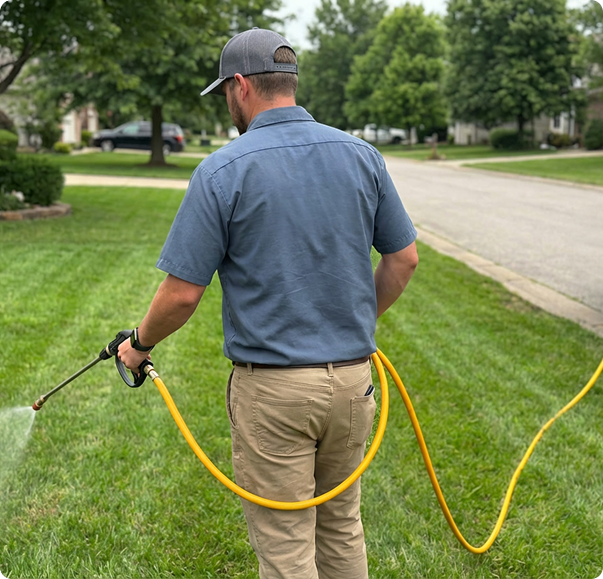
For liquid aeration, rake any matted areas, apply the solution evenly across your yard (during a cooler time of day when less will evaporate), and adjust the application based on your lawn’s response and needs.
After you aerate your lawn, water lightly for the next 2 weeks. If you overseeded, those aeration holes give seed a place to settle in and make direct contact with soil instead of sitting on top of dry, compacted ground, which is a big part of why seed-to-soil contact matters for germination in the first place.
During that germination window of your grass seed, focus on keeping the seedbed consistently moist rather than just watering lightly on a schedule. That usually means several short, light waterings a day so the top layer of soil never dries out.
Once the new grass reaches its first mow (usually around 3 inches tall), you can start transitioning to a normal watering schedule. That includes deeper, less frequent watering to encourage those roots to grow down instead of staying shallow.
Keep in mind that core aeration provides more of an opportunity to put down fertilizer or seed within 48 hours (your lawn’s extra “open” to nutrients), since those holes let fertilizer reach the root zone directly instead of sitting on the surface.
Lastly, avoid heavy foot traffic for a week, and when it’s time for that first mow on new grass, make sure it’s reached about 3 inches tall first, and use a sharp blade to avoid pulling up the still-shallow young roots.
Also, remember to avoid these common mistakes:
- Don’t aerate dormant grass. You should wait until it’s actively growing.
- Don’t use the wrong equipment. Lawn aerators are the best tools for this process.
- Don’t skip overseeding after core aeration. Bare spots? This is your chance to fill them in.
- Don’t use a spike aerator on clay soil. This just makes compaction worse.
- Don’t aerate annually simply because more aeration seems better. Excessive soil disruption can stress grass and roots, causing your lawn to struggle or become weak.
- Don’t aerate too frequently. Once per year is recommended, and it should only be done based on what you’re seeing related to compaction, foot traffic, and your areas unique soil.
DIY Equipment Options:
Manual (push) aerators use hollow tines or plug aerator heads that you step on and push into the soil by hand. These work okay for smaller lawns but can be a serious workout on sizeable properties or heavily compacted areas of the lawn.
Powered aerators are gas- or electric-driven core aerators that pull plugs with far less physical effort, making them a better fit for larger lawns or soil that’s significantly compacted.
Rental equipment is available an option as well. Most home improvement or equipment rental stores carry powered core aerators by the day or half-day, which is often more practical than buying one you’ll only use once or twice a year.
Keep in mind that, for the most part, the larger or more compacted your lawn, the more a powered aerator will save you time and effort compared to a manual hollow-tine option.
DIY vs. Professional Aeration
DIY aeration might make sense if:
Your yard is small (under 5,000 sq ft)
- You’re comfortable renting equipment or have prior experience
- You want to pay less money but spend more time working
- You enjoy a good workout (those machines are heavy!)
Call the pros at Fairway Lawns for liquid aeration services when:
- You care about the overall healthy of your grass
- Your yard is larger (over 5,000 sq ft)
- Your lawn feels like a parking lot because it’s so hard
- You’re dealing with serious thatch problems
- You’d rather spend your weekend at a pool than pushing or spraying

 Ice + Snow = Slips and Falls! Order Ice Melt now. Starting at $59/bucket. Free delivery!