Learn About Choosing & Timing Your Fall Fertilizer for the Best Results
Article at a Glance:
- Fall fertilizer builds roots and stores energy for winter
- Your grass type (cool-season or warm-season) determines timing, nitrogen levels, and the NPK ratio you need
- A soil test beats guesswork, especially before adding phosphorus or potassium
- The general rule of thumb is to stop nitrogen applications about six weeks before your area’s historic first-frost date
- Reach out to Fairway Lawns for lawn treatments, weed control, and so much more!
Why Fertilize Your Lawn in Fall
With summer’s scorching temperatures and the traffic pets and kids put on your lawn during the season, your grass can be worn down come September. That makes fall lawn fertilizer essential for recovery.
In spring, fertilizer pushes new blade growth. Fall fertilizer, on the other hand, works underground. It feeds the roots, helping your grass store carbohydrates and nutrients for winter.
That root investment pays off. First, deeper, stronger roots mean your lawn handles winter stress better. So it stays healthy in the face of cold snaps, dry spells, and ice events.
Second, come spring, a well-fed lawn greens up faster and thicker. Trust us, you’ll notice the difference walking out your front door in March.
Get to Know Your Grass Type & Soil
Before getting fertilizer, you should take into account what kind of grass you have and what your soil needs. Skip this and you won’t have the full picture for your specific lawn care situation.
Cool-season and warm-season grasses behave differently in fall, so a one-size-fits-all fertilizer recommendation won’t work.
A soil test is your best place to start. Most state land-grant universities offer inexpensive routine soil analysis through their county extension offices. Mail in your sample, wait a couple weeks, and you’ll know exactly where your phosphorus and potassium levels are at. Or you can buy one from your local garden center or hardware store.
Warm-Season Grasses
Most of the South has Bermuda, zoysia, St. Augustine, centipede, or Bahia grass. These grasses stop actively growing in late fall as they prepare to shut down for the winter. Pushing nitrogen on them late in the season isn’t a great idea. It can encourage new growth that isn’t strong enough to survive any hard freeze.
Most warm-season grasses need little to no nitrogen after August. Any late-season product should lean on potassium instead, which helps with cold tolerance and stress resistance.
Ratios like 0-0-22, 0-0-60, 10-0-20, or 12-3-18 are typical for this stage. Some Southern-formulated products also bundle in weed control, fire ant treatment, or drought protection alongside the feeding.
Cool-Season Grasses
If you’re in the upper South (parts of Tennessee, North Carolina, Virginia, or the transition zone stretching across Kentucky and Arkansas), chances are you’re mowing fescue, fine fescue, Kentucky bluegrass, or ryegrass. These grasses are actively growing right through fall. It’s their prime feeding window.
Cool-season lawns generally want more nitrogen than their warm-season cousins this time of year, since nitrogen supports the color, root development, and energy storage that carry them through winter dormancy.
Look for ratios like 3-1-1, 3-1-2, or 4-1-2. Products like 16-4-8 or 30-0-12 are common examples on shelves. Some nitrogen-only options exist, but only reach for phosphorus and potassium if your soil test actually shows a deficiency.
What Do Fall Fertilizer Numbers Mean?
Every bag lists three numbers (the NPK label) representing the percentage of nitrogen, phosphorus, and potassium inside. Each nutrient does something different, so knowing what each one does saves you money and spares your lawn unnecessary stress.
Nitrogen
- Helps with root development, grass coloring, and carbohydrate storage for winter.
- Ideal for cool-season grasses in fall.
- Apply too much, or apply it too late, and you risk unwanted late-season growth that’s vulnerable to frost damage.
- Stick to no more than one pound of nitrogen per 1,000 square feet per application, regardless of grass type.
Phosphorus
- Supports root growth and overall plant health.
- Most established lawns already have plenty of it in the soil.
- Unless your soil test flags a real deficiency, or you’re overseeding, you probably don’t need to add more.
- Excess phosphorus can run off into local waterways and harm the environment.
Potassium
- Helps with freeze protection, disease resistance, and general stress tolerance.
- Only add it where your soil is deficient.
- Adding too much potassium late in the season offers no benefit and, in some climates, has been linked to snow mold.
Iron and seaweed extracts
- Iron gives your lawn that deep green color without pushing excess growth.
- Seaweed-based additives are marketed for root support and winter-stress resilience.
- These two support the more crucial additions of nitrogen, phosphorus, and potassium.
Tips for Choosing the Best Fall Lawn Fertilizer
The essential steps are to identify your grass type, get a soil test, check your local regulations, and match the NPK ratio to what your lawn needs. From there, pay attention to timing to guide whether you should use slow-release or quick-release fertilizer.
You’ll see some products that only push nitrogen in fall. That’s okay for some cool-season lawns, but if it doesn’t match up with what your soil test results say you need, you should avoid it.
Once you’ve settled on a product, read the label closely for coverage rate and recommended spreader settings. A bag that covers 5,000 square feet won’t stretch evenly across a 10,000-square-foot yard. You’ll just wind up with a patchy, underfed lawn.
Slow-Release vs. Quick-Release Fertilizers
Early fall calls for slow-release fertilizer, which feeds the lawn steadily over one to two months (up to a full pound of nitrogen per 1,000 square feet). It’s a gentler approach, less prone to burning, and forgiving if you’re a few days off on timing.
Mid-to-late fall is when you should consider a quick-release fertilizer. These absorb faster, which matters once soil temperatures start dropping and you’re racing the calendar before dormancy sets in.
Typically you’d use around half a pound of nitrogen per 1,000 square feet in this window. For warm-season lawns that need a bit of nitrogen, keep it minimal. Aim for 0.25 to 0.5 pounds per 1,000 square feet, and only if your grass is still actively growing.
Organic vs. Synthetic Fertilizers
Organic fertilizers rely on warm soil and active microbial life to break down and release nutrients. They work best earlier in fall while soil temperatures are higher.
Once things cool off, synthetic options tend to be more reliable because they don’t depend on microbial activity.
Liquid vs. Granular Fertilizers
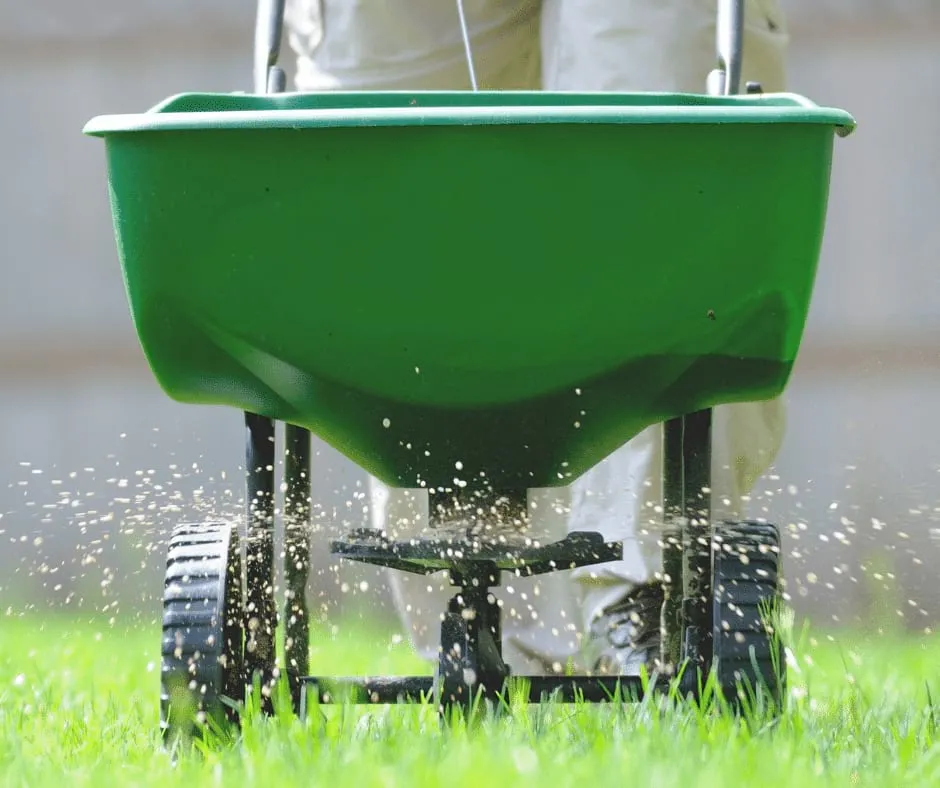
Granular fertilizer, applied with a spreader, gives you controlled, even coverage and is the go-to choice for most residential lawns.
Liquid fertilizer is an alternative application method some homeowners prefer. It’s especially good for spot treatments. You still want to get the correct rate, even distribution, no missed strips or double-dosed spots.
Fall Weed and Feed
Fall is when some perennial broadleaf weeds like dandelions, clover, and henbit take root. This makes a fall weed-and-feed product useful for cool-season lawns.
Warm-season lawns nearing dormancy need a gentler touch. For instance, look for nitrogen-free weed control options, so you’re managing weeds without encouraging grass growth you don’t want.
When to Apply Fall Fertilizer
Timing trips up more homeowners than product selection does. The general rule is to apply your final nitrogen application no later than six weeks before your area’s historic first-frost date. If it’s applied too late, new grass might grow that won’t survive freezing temperatures.
Warm-Season Timing
Warm-season grasses want their fertilizer earlier and lighter.
- The general window runs mid-August through October, with the real action happening mid-August through late September.
- After August, most experts recommend stopping or drastically reducing nitrogen.
- In warmer coastal or far-southern climates, where frost holds off longer, some homeowners can stretch applications into November.
- Read more about when to fertilize your lawn
Cool-Season Timing
Cool-season lawns have a fairly generous window.
- It generally goes from mid-August through mid-November, with the sweet spot falling between late August and mid-October.
- Slow-release products work best applied earlier in that window and quick-release or “winterizer” blends suit the later end.
- If your fescue or bluegrass lawn is still growing in October, that’s usually still a fine time to fertilize.
When Not to Fertilize
- Frozen ground
- Fully dormant lawn
- Drought-stressed grass
- Right before a heavy rainfall
- Once your grass has stopped actively growing
Fertilizing under these conditions wastes product, risks runoff, and doesn’t help your yard at all.
How to Apply Fall Lawn Fertilizer
Start by measuring your lawn’s square footage. Most spreader apps and fertilizer calculators will do the math for you once you add in that number.
Calculate the correct product amount based on the label. Then, mow the lawn beforehand so the fertilizer reaches the soil rather than getting hung up in overgrown blades. Finally, set your spreader according to label instructions.
Application Best Practices
- Make even, overlapping passes without doubling back over the same strip (double coverage can cause fertilizer burn)
- Stay under one pound of nitrogen per 1,000 square feet per application, no matter how much you want to go heavier to try and achieve results more quickly
- Keep fertilizer off driveways, sidewalks, and storm drains, and sweep stray granules back onto the grass
- Water lightly afterward to help nutrients settle into the soil
- Skip fertilizing right before a heavy rain, since runoff wastes fertilizer and can carry nutrients into waterways
Supporting Fall Lawn Care Tasks
As you may know, fertilizing your lawn should be one part of a bigger fall routine.
Adjust Watering and Mowing
As growth slows, ease off your watering schedule to match. Also, raise your mower height for the final cuts of the season. Taller grass blades help insulate the crown of the plant against cold snaps.
Manage Weeds and Leaves
Spot-treat any weeds you see now, while the plant is actively pulling energy down into its roots. That’s when herbicides do their best work.
Don’t let fallen leaves pile up. Rake or mulch them regularly. A thick, wet leaf layer smothers grass and invites fungal problems. Light, shredded leaf cover acts kind of like fertilizer, returning nutrients to the soil as it breaks down.
Fall Lawn Fertilizer FAQs
Prepare Your Lawn for the Seasons Ahead!
Want your fall lawn fertilizer to work well? Figure out your grass type, get a soil test, and choose a fertilizer that actually matches what your lawn needs. Apply while the grass is still active, respect your region’s best timing window, and remember to maintain good mowing, watering, and leaf management habits.
Fall fertilizing isn’t complicated. However, it does take some attention to timing and product selection to get real results. If juggling soil tests, NPK ratios, and application windows sounds like more than you want to take on this season, we can handle it for you.
The team at Fairway Lawns proudly serves seven states and dozens of communities, ensuring high-quality lawn care and pest control services across the South: