The difference between liquid aeration and core aeration comes down to method and speed: core aeration mechanically removes soil plugs (2-3 inches deep, ½ to ¾ inches wide) for immediate compaction relief, while liquid aeration uses a chemical spray to gradually loosen soil over 4-8 weeks without surface disruption.
Key Takeaways
- Choose core aeration if your soil is severely compacted, you plan to overseed, or your lawn has never been professionally aerated.
- Choose liquid aeration if you have mild to moderate compaction, want to avoid surface disruption, or need to treat hard-to-reach areas.
- Timing matters: Cool-season grasses benefit most from fall aeration; warm-season grasses thrive with late spring or early summer treatment.
- Frequency: Core aeration is typically performed once or twice annually; liquid aeration can be applied 2-4 times per year for maintenance.
- Results timeline: Core aeration shows visible improvement in 1-2 weeks; liquid aeration benefits accumulate over 4-8 weeks.
Let’s Settle the Turf War Over Different Kinds of Lawn Aeration
You water. You fertilize. You whisper words of encouragement. But your grass still looks patchy, thin, or not as green as you’d like. It’s time to say hello to lawn aeration. This simple process gives roots access to oxygen. Suddenly, water actually penetrates. Fertilizer stops washing away. And your grass? It thrives.
But not all aeration is the same. Core aeration is the traditional, mechanical aeration that leaves dirt plugs everywhere. Liquid aeration is a cutting-edge, no-mess soil solution with slower results.
Now let’s learn more about lawn aeration methods to see which one is right for your yard.
What Is Lawn Aeration & Why Does It Matter?
Lawn aeration, whether by core or liquid methods, is a process to relieve soil compaction and allow vital water, air, and nutrients to get down to the roots of the grass.
How does soil compaction happen? A few factors lead to compaction: foot traffic, large machinery, clay soil, and thatch buildup. (Thatch is the spongy layer of dead grass and roots that gets in the way of fertilizer and water.) Compacted soil becomes dense, making it difficult for air, water, and crucial nutrients to reach your lawn’s roots.
Aerating your yard improves the uptake of nitrogen, phosphorus, potassium, iron, calcium, manganese, and more, all of which your grass needs to look lush, green, and healthy.
More reasons why lawns need aeration:
- Stronger roots. More oxygen = deeper roots that can survive summer droughts.
- Better nutrient uptake. Fertilizer won’t just sit on top or wash into the street.
- Less runoff. Water actually soaks in instead of creating mini-lakes on your lawn.
- Fewer bald spots. Compacted soil causes grass to thin out or stop growing in certain areas.
- Healthier soil. Encourages earthworms and microbes that keep your lawn thriving and can lead to greener grass.
What Is Core Aeration?
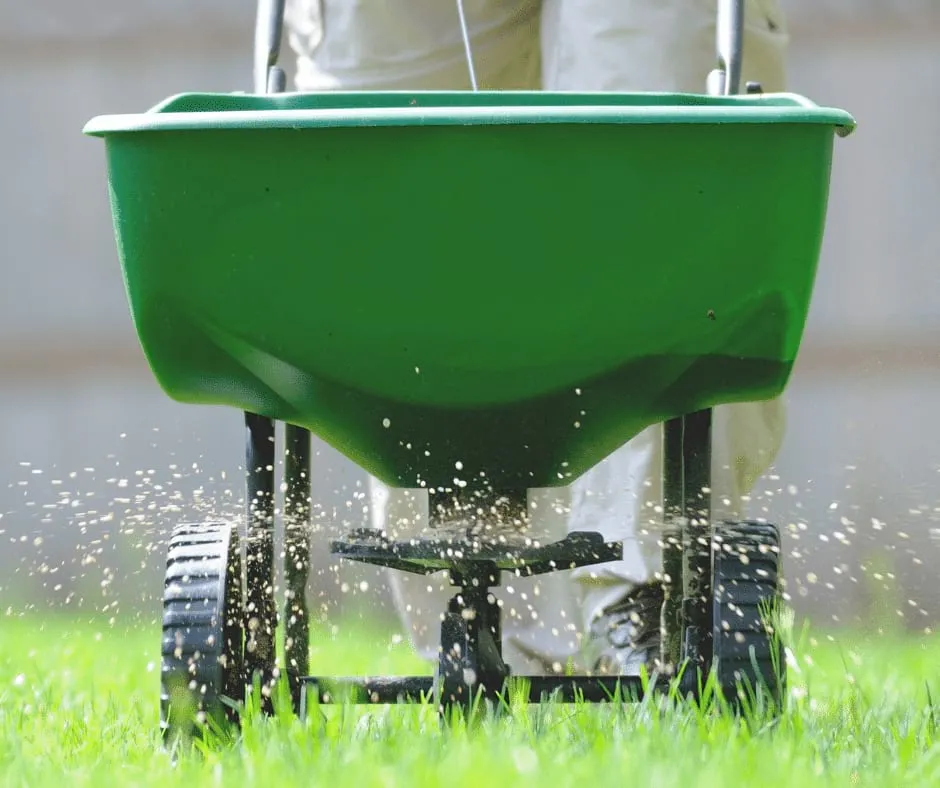
Using an aeration machine, core aeration mechanically removes small plugs, or “cores,” of soil from the lawn. These plugs are typically 2-3 inches deep, ½ to ¾ inches in diameter, and spaced approximately 3 inches apart. This lets oxygen, water, and nutrients penetrate deeper into the soil and roots. The process leaves small plugs of soil and thatch on the surface of the yard, which break down naturally within a few weeks. The result is a healthier environment for your grass to grow thick, green, and lush.
Core aeration works well on most lawns and is especially effective for cool-season grasses (Kentucky bluegrass, fescue, ryegrass) or lawns with severe compaction issues.
What are the benefits of core aeration?
- Fast improvement (visible results within 1-2 weeks)
- Improves nutrient and water absorption
- Lessens the accumulation of thatch
- Gets the soil ready for fertilization and overseeding
- Increases drought resistance and root depth
What Is Liquid Aeration?
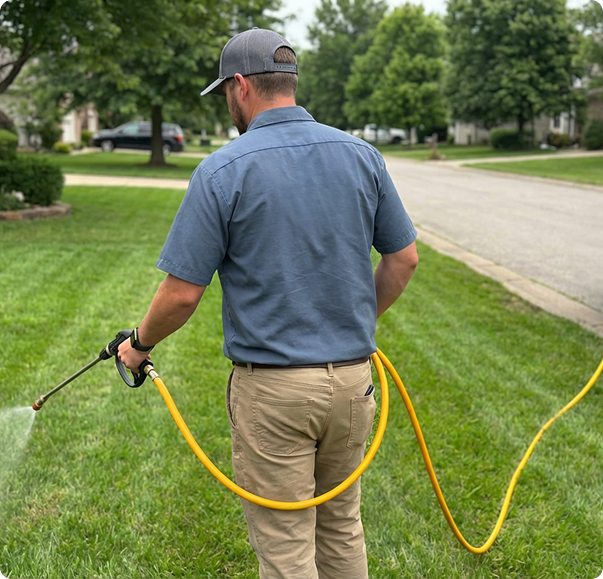
Liquid aeration is an innovative alternative to traditional core aeration featuring a specialized liquid spray that loosens soil over time at the microscopic level and encourages microbial activity. It may take longer to work (typically 4-8 weeks to see results), but it often delivers effective results (and you don’t have ugly plugs on your grass).
Liquid aeration is often a good fit for warm-season grasses (Bermuda, Zoysia, St. Augustine) or lawns with mild to moderate compaction issues. It’s worth noting that some lawn care experts recommend liquid aeration primarily as a supplement to core aeration, particularly for severe compaction issues where mechanical treatment provides more immediate relief.
What are the benefits of liquid aeration?
- Minimal disturbance of the soil (no mess or plugs)
- Covers difficult-to-reach places
- No risk of puncturing sprinkler lines or shallow utilities
- Long-term enhancement of the soil ecosystem
When is the Best Time to Aerate Your Lawn?
The ideal aeration timing depends on your grass type:
Cool-Season Grasses (Kentucky bluegrass, fescue, ryegrass):
- Early fall (late August–October): Best timing gives roots time to recover before winter and creates the perfect bed for overseeding.
- Early spring (March–April): Secondary option to prepare grass for summer stress.
Warm-Season Grasses (Bermuda, Zoysia, St. Augustine):
- Late spring to early summer (April–June): Best timing right before grass enters peak growth.
- Early fall (September–October): Secondary option in warmer regions, as long as grass is still actively growing and has several weeks to recover before dormancy.
When should you NOT aerate?
If not done at the right time, even the best-laid lawn care plans can backfire. Avoid aerating during periods of intense heat or drought (your grass is already under stress), freezing temperatures (frozen soil can ruin aerator tines), and periods of soggy, waterlogged soil (heavy equipment and foot traffic will only worsen compaction).
Liquid vs. Core Aeration: Key Differences
| Feature | Core Aeration | Liquid Aeration |
| Application Method | Mechanical (hollow tines remove plugs) | Chemical spray applied to lawn surface |
| Time for Results | Immediate improvement; visible results in 1-2 weeks | Gradual improvement over 4-8 weeks |
| Soil Coverage | Individual punctures may not provide even coverage | Covers entire lawn surface uniformly |
| Surface Disruption | Leaves visible soil plugs that take time to break down | No mess or unsightly residues |
| Overseeding Compatibility | Ideal for combining with overseeding | Less effective for overseeding (no openings for seed-to-soil contact) |
| Application Frequency | Once or twice annually | 2-4 applications per year for maintenance |
| Best For | Severe compaction, overseeding, clay soils | Mild to moderate compaction, maintenance |
Which Aeration Method Is Best for Your Lawn?
Choose core aeration if:
- Your soil is severely compacted or feels like concrete
- You plan to overseed or plant new grass
- Your lawn has never had professional aeration
- You have clay soil or heavy thatch buildup
Choose liquid aeration if:
- You have mild to moderate compaction
- You want to avoid dirt-plug cleanup
- You need to treat hard-to-reach areas
- You’re maintaining between core aeration treatments
- You’re concerned about damaging irrigation lines or utilities
Overseeding & Fertilization After Aeration
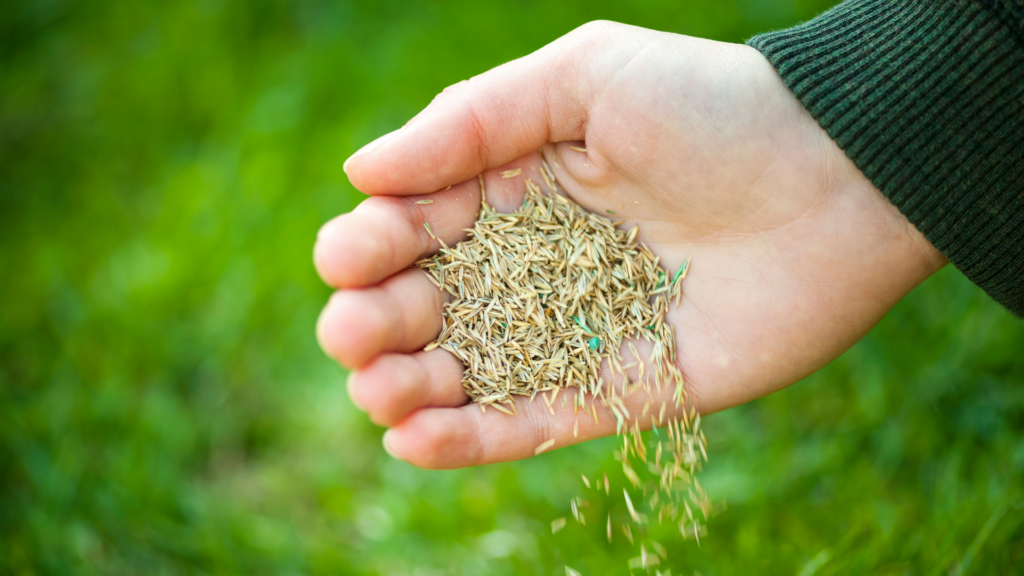
Patches or other exposed areas in your yard can be covered with overseeding. You can maximize the benefits of a seeding application by combining aeration with the increased root growth of autumn and spring.
Aeration creates an ideal seedbed that helps new seeds germinate. Air, nutrients, space, and water all work together to help new seeds grow and cover bare spots.
Core aeration provides an excellent opportunity to put down fertilizer or seed within 48 hours since your lawn is extra “open” to nutrients during this time. For liquid aeration, you may need to wait about a week before fertilizing, so check the product label for specific timing.
The Bottom Line: Core or Liquid Aeration?
There’s no single winner in the aeration debate. Core aeration is the go-to choice for heavily compacted soil, clay-heavy yards, and lawns that need overseeding. Liquid aeration is a convenient, mess-free option for mild compaction, hard-to-reach areas, and ongoing maintenance between core treatments. Many homeowners get the best results by combining both methods throughout the year.
Not sure which method your lawn needs? Contact your local Fairway Lawns team, and our lawn care experts will assess your soil and recommend the right aeration plan for your yard.
FAQs About Liquid & Core Aeration
Ready for Aeration? Reach Out to Our Team!
Ultimately, the debate of core versus liquid aeration is about providing your grass with the breathing room it sorely needs. By paying attention to what’s going on underneath those blades, you’re already winning, regardless of whether you choose liquid’s subtle soil science or go all out with core aeration.
Reach out to Fairway Lawns today to learn more about lawn aeration! We proudly serve seven states and dozens of communities, ensuring high-quality lawn care and pest control services across the South:
Huntsville AL
Birmingham AL
Jacksonville FL
Conway AR
Springdale AR
Ft Smith AR
Little Rock AR
Augusta GA
Tulsa OK
Columbia SC
Greenville SC
Charleston SC
Knoxville TN
Nashville TN
Memphis TN