Discover What Kind of Mulch & How Much Is Right for You
What You’ll Read About:
- Mulch is any material spread over bare soil.
- Mulching cuts down on watering, weeding, and fertilizing while safeguarding roots and keeping your yard looking sharp.
- It sits on top of soil to protect it, while compost gets worked in to feed it.
- Garden beds need about two to three inches of mulch, as more than that can block water and air.
- If you want healthy grass and a beautiful yard, reach out to Fairway Lawns for expert lawn care and pest control in the South.
What Is Mulch?
Mulch is any material you spread over exposed soil. It’s a layer that sits on top of your garden beds, around your trees and shrubs, or even across your lawn, doing a job that’s part practical and part decorative.
Mulch isn’t just one thing. It can be bark, wood chips, straw, gravel, shredded leaves, or finely cut grass clippings left behind after mowing. Some types are natural and break down over time. Others, like stone or rubber, are built to stick around for years.
What Is Mulching?
This is the act of putting that layer of material down. The process splits into two different categories depending on where you’re working.
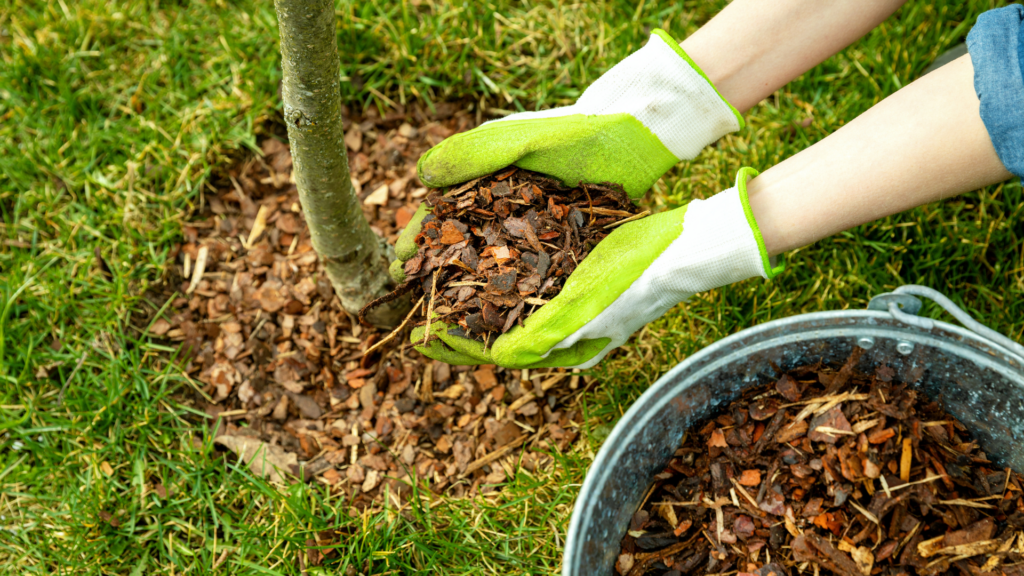
In garden beds, mulching usually means spreading bark, leaves, straw, or gravel over the soil surface. Basically, you’re covering bare dirt with something that protects and improves it.
On the lawn, mulching means something a little different. Instead of bagging up grass clippings or blasting them out the side of the mower, you’re finely chopping them and letting them fall back into the turf.
The clippings disappear into the grass within a few days, feeding the soil as they break down. It’s a lawn care shortcut that works extremely well!
Mulch vs. Compost
These two get mixed up, so here’s what’s different. Mulch stays on top of the soil for moisture retention, weed control, and surface protection. Compost gets mixed into the soil to deliver nutrients directly to plant roots. Organic mulch will eventually break down and act a bit like compost, but in the meantime, it’s doing surface-level work that compost doesn’t do.
What Does Mulch Do?
- Retains soil moisture. Mulch slows down evaporation, which matters a lot during a dry summer when the water bill starts creeping up.
- Suppresses weeds. Cover the soil, block the sunlight, and weed seeds can’t sprout as easily.
- Moderates soil temperature. Mulch insulates roots, keeping them cooler in scorching heat and warmer when a frost rolls through.
- Reduces erosion and splashing. Say goodbye to muddy paths or soil washing away after a heavy rain.
- Supports root health. Roots stay protected from compaction and from contact with contaminated surface soil.
- Looks good. A clean mulch bed finishes off a landscape in a visually appealing way.
How Organic Mulch Works
As it breaks down, this kind of mulch returns organic matter and nutrients straight into the soil. Microbes and insects go to work on it, chewing through the material and leaving behind richer, more fertile dirt. It also supports beneficial soil organisms and improves drainage and structure over the long haul.
Ever notice how an established, wooded garden seems to mulch itself? Fallen leaves and plant litter pile up naturally and eventually do the same job. Nature’s been doing this since long before bagged mulch existed.
Benefits of Mulching a Lawn
When you let those clippings fall back into the grass, you’re returning nitrogen, potassium, and other nutrients straight to the root zone. Stronger roots, thicker growth, and better moisture retention tend to follow. It also saves time and cuts down on yard waste, since the clippings just decompose right there.
More reason to mulch your lawn:
It improves the soil. Wood and other organic mulches break down gradually, and as microbes and insects consume the material, they return the byproducts to the soil as organic matter.
It protects against temperature swings. Mulch acts like insulation, keeping roots cooler in summer and warmer in winter.
It conserves moisture. Less evaporation means less watering.
It helps prevent weeds. A two-to-four-inch layer naturally blocks weed seeds from getting the sunlight they need to germinate.
It gives your garden a polished look. Mulch fills in the gaps, covers bare patches, and provides the finishing touch to your lawn and garden.
Organic vs. Inorganic Mulch
Organic Mulch
These are made from natural materials like bark, wood chips, pine needles, grass clippings, newspaper, shredded leaves, straw, or hay. They decompose over time, which means periodic replacement. So it’s more maintenance, but more soil benefit.
Organic mulch is generally the stronger pick for vegetable gardens since it provides nutrients and organic matter to the soil. It suppresses weeds well, though not permanently, since it thins out as it breaks down.
Inorganic Mulch
Gravel, stone, plastic, rubber chips, landscape fabric. These kinds of materials decompose slowly or not at all. They’re the long-haul option for blocking weeds and holding moisture, but they won’t add anything to your soil nutritionally.
You’ll typically see inorganic mulch used around foundations, trees, and plants that prefer drier, warmer, rockier conditions. Once it’s down, though, it can be difficult to remove.
Common Types of Mulch & Where to Use Them
Bark and wood chips work well around trees, shrubs, foundation plantings, and beds you don’t replant often. Coarser pieces last longer but can be tricky to dig through later.
Pine needles resist compaction and conserve moisture nicely. They may slightly lower soil pH, though naturally fallen needles have a fairly mild effect compared to fresh green ones.
Grass clippings are great for lawns, compost piles, or out-of-sight garden corners. They decompose fast and return nutrients quickly.
Newspaper, layered a few sheets thick and moistened, suppresses weeds and helps regulate soil temperature. Cover it with another organic mulch for a tidier look.
Shredded leaves are free, plentiful every fall, and great for woodland or vegetable gardens. They encourage earthworm activity and decompose right into the soil. Just be sure to shred them first.
Straw and hay are go-to choices for vegetable gardens and garden paths. They reduce disease splash onto lower leaves and keep things from turning into a mud pit.
Plastic and landscape fabric retain moisture and block weeds effectively around shrubs and foundations. However, thicker plastic traps heat, blocks water and air, and can damage soil organisms over time.
Gravel and stone suit rain gardens, Mediterranean-style landscaping, and spots that need extra drainage or heat retention. Just know that some plants love rock, and others genuinely don’t.
How to Apply Mulch in a Garden
First, prep the area. Clear out weeds and any old, worn-out mulch, and level the soil before laying anything new down.
Apply mulch at the right depth, roughly two to four inches. Go thicker than that and you risk smothering roots, blocking air and water from getting through.
Also, don’t pile mulch up against tree trunks and plant stems. That traps moisture against the bark and invites rot.
Finally, leave some soil bare here and there. If you want certain plants to reseed naturally, a fully mulched bed will work against you.
When Is the Best Time to Mulch?
For garden beds, early-to-mid spring is best. This is after the soil’s warmed but before weeds get a foothold. Late spring and early fall work too.
Mulch too early and you risk delaying that spring soil warm-up. Mulching in summer or fall still protects the soil and locks in moisture, even if weed suppression isn’t quite as strong.
For lawns, hold off until mid-to-late spring when steady, healthy growth kicks back in. Keep mulching through summer while things are actively growing. An early fall pass can return some nutrients before winter sets in. Once growth slows and the lawn stays damp longer, it’s time to switch back to regular mowing and bagging.
How Lawn Mulching Actually Works
The grass gets cut as normal, but the clippings keep circulating beneath the deck. Airflow pushes them back through the blades again and again, slicing them into finer and finer pieces. Eventually, they’re small enough to settle down between the grass blades, where they decompose and feed the soil.
How to Mulch a Lawn Correctly
- Mow once or twice a week during active growth so the clippings stay short and light.
- Follow the one-third rule: Never cut off more than a third of the grass height in a single pass.
- Mulch only when the grass is dry.
- Use a mower with an actual mulching function or a compatible kit, keep the blades sharp, and clean the deck regularly.
Mulching Mowers, Kits, and Plugs
Dedicated mulching mowers are built to contain and re-cut clippings repeatedly. If you’ve already got a mower, lawn tractor, or zero-turn, a conversion kit can often get the job done. This typically has a specialized blade plus a plug that blocks the discharge chute.
Without that mulching function, standard equipment tends to leave clippings larger and clumpier than you’d want.
When Should You Avoid Mulching?
Wet or shaded lawns are a problem because damp clippings stick together, clog the deck, and pile up instead of scattering evenly. Those clumps block sunlight and airflow, which can lead to yellow patches or fungal issues.
Tall or overgrown grass produces too much clipping volume, and a thick mat can smother what’s underneath.
Irregular mowing schedules don’t play well with mulching, since it depends on consistency. Skip a few weeks and the clippings get long, heavy, and slow to decompose.
New or unhealthy lawns should be left alone for now. Young grass isn’t established enough, and moss should never be mulched, since it tends to spread rather than break down.
Potential Disadvantages of Mulching
- Thick mulch can block seed germination and stop plants from spreading naturally.
- Some materials disturb ground-nesting bees and other beneficial insects.
- Woody, high-carbon mulches can temporarily pull nitrogen out of the soil as they decompose.
- Mulch can also shelter pests like slugs, and synthetic options like plastic can harm soil organisms over time.
- The wrong material, too much depth, or trapped moisture against a stem can do more harm than good.
Frequently Asked Questions About Mulch
-
Is mulch necessary in every garden?
Not at all. Mulch shines most in dry climates or wherever moisture loss, weeds, and erosion are genuine concerns.
-
Does lawn mulching cause thatch?
Generally, no. Finely cut clippings decompose quickly with regular mowing. Thatch is mostly built from accumulated dead roots and stems, not grass clippings.
-
Can leaves be mulched into a lawn?
Light, dry leaves, yes. Thick, wet, or matted leaves should be collected or composted instead.
-
Does mulching spread weeds?
Regular mowing actually helps by cutting weeds down before they flower and seed. The risk comes from mulching overgrown, mature weeds irregularly, which can scatter seed across the lawn.
-
How much mulch should I use?
Garden beds want an even two-to-three-inch layer. Lawn clippings should form a thin layer that settles between the grass blades.
Take Your Lawn Care to the Next Level
So…what is mulch, and is it worthwhile? It might seem like a small detail in the bigger landscaping picture, but it does some important work. That includes holding moisture, fighting off weeds, protecting roots, and giving your yard that finished, cared-for look.
Garden mulching and lawn mulching aren’t the same process, but they share the same goal: healthier soil with less effort on your part. Get the type, depth, and timing right, and mulch becomes a low-effort, high-payoff habit in your yard care routine.
If all this still sounds like more than you want to take on yourself, that’s what professionals are for. The team at Fairway Lawns proudly serves seven states and dozens of communities, ensuring high-quality lawn care and pest control services across the South:
Blog Contributor: Chris Harris
Chris Harris is associated with the Fairway Lawns Jacksonville location. Professional background details, certifications, and years of experience were not included in the provided information, so this contributor bio should be updated once those details are available.